
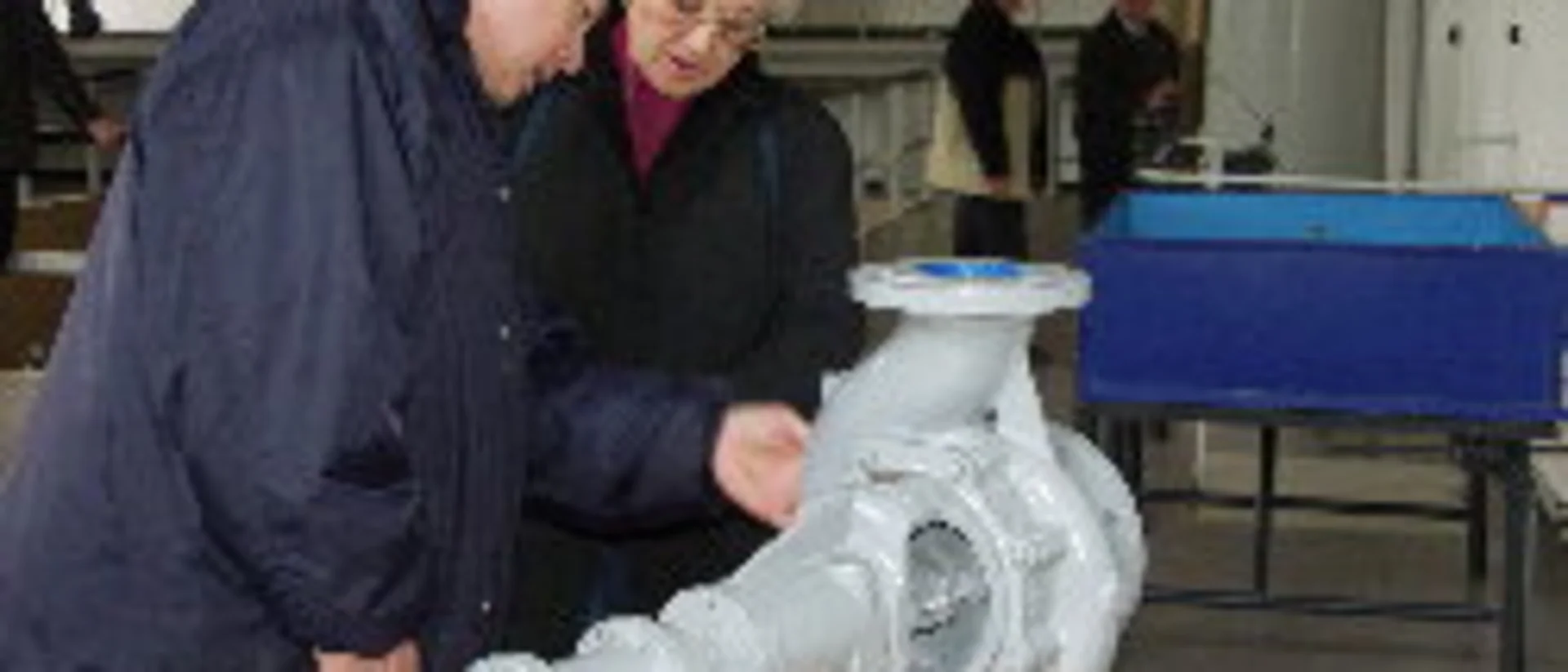

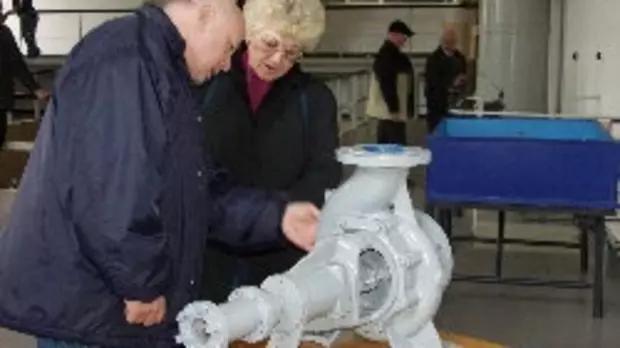
One week after the adventure trip for children to the Queckborn waterworks, Stadtwerke Gießen AG (SWG) invited adult visitors to an open day at the waterworks. Last Saturday, everything revolved around the topic of water, especially drinking water. 55 participants accepted SWG's invitation. Together with Ellen Rothgerber, a member of the private customer sales team, those interested set off from SWG's infoCentre on the market square by bus to Queckborn. There, the SWG energy team presented the visitors with information about Giessen's water supply. Many visitors found it interesting to learn how the water makes its way from Queckborn to Giessen.
It is no secret that Germany, unlike many developing countries, is blessed with water. However, it is not only the quantity that plays a role, but especially the quality. That's why the top priority of the municipal utilities as a water supplier is to guarantee the quality of the number one foodstuff. This is also ensured by the strict quality requirements of the Drinking Water Ordinance. To ensure that SWG customers can enjoy their drinking water at all times without any worries, the municipal utilities are constantly on the go. Every month, the Institute for Environmental Medicine and Hygiene tests a series of samples from the Giessen water network.
In addition to the waterworks, the visitors also toured an elevated tank. After all, SWG pumps the water from well systems via pipe and pump systems to the tap.
After more than two hours, the tour slowly came to an end. The participants will certainly appreciate the precious water from the tap even more in future.
"Your life - our energy, that's SWG's brand promise," explained Rothgerber, "true to this motto, it is a particular pleasure for us to bring our customers a little closer to the energy they need every day. Due to the extremely positive response, this will certainly not be the last tour of the waterworks."
Before heading back to Giessen, the visitors received a fitting gift - a water clock. This is a fascinating example of creative interaction between science and technology. The water clock obtains the energy it needs from nature and does not require a battery. Conventional water or salt water makes the clock work.