

 Maximum comfort
Technical requirements:
intelligent measuring system (iMSys)
To use a dynamic electricity tariff, a smart electricity meter is required that records consumption at short intervals and transmits the data in the correct format.
These meters enable precise recording of consumption and accurate billing, which is necessary for dynamic tariffs.
Heating load calculation included
Calculating the heating load is the key step in ensuring an energy-efficient and comfortable heating system. Our specialists will be happy to calculate your specific heating load and find the ideal solution for your home.
Smart home devices and automation (optional)
Appliances that can be controlled in their electricity consumption (e.g. heat pumps or electric cars) can maximise the benefits of a dynamic tariff.
Our network for your convenience
To ensure maximum convenience for you, we at Wärmepumpe PLUS work together with the Giessen district craftsmen's association and the Giessen guilds. That means:
- Large network of regional and certified tradespeople
- No long waiting times - we arrange a specialist company within a very short time
- SWG as a central point of contact - we take care of communication with all the trades involved
Secure your PLUS now and benefit from our broad network of specialists.
What are the advantages of a heat pump?
According to the Federal Environment Agency, around 80% of the final energy consumption of an average household is still accounted for by the provision of heat. In many cases, fossil fuels such as natural gas or oil are still used here. This is not only expensive in the long term, but also has a negative impact on the environment.
If you want to heat in a cost-effective and climate-friendly way in the long term, you would be well advised to switch to renewable energies. Such as a heat pump. These systems work like a refrigerator in reverse: they extract heat from the environment, such as the air, ground or water outside, and bring it into the house. There they transfer the heat to the heating system.



FAQ
Heat pumps transfer heat from the ambient air, groundwater or the ground into buildings. A refrigerant circulating in a closed loop absorbs heat and evaporates in the process. An electrically powered compressor compresses the refrigerant, which is now in a gaseous state, causing its temperature to rise significantly. It is precisely this temperature increase caused by pressure that is the key factor. This is because, in another component – the condenser – the refrigerant, at high pressure and consequently high temperature, transfers thermal energy to the heating system. In the process, it returns to a liquid state and, once the pressure – and thus the temperature – has been reduced again by the expansion valve, it can once more absorb heat from the environment.
Due to their design, air-to-water heat pumps are more affordable than groundwater or geothermal heat pumps. They draw their energy from the ambient air and convert it into heat to heat rooms and provide hot water. They represent an environmentally friendly and cost-effective alternative to conventional heating systems. By 2025, just under 300,000 air-to-water heat pumps had been installed across Germany – significantly more than gas condensing boilers, which had long been the most popular heating system in Germany.
Heat pumps are capable of generating heat even on freezing winter days, although their efficiency does decrease as the outside temperature drops. That is why the vast majority of units are fitted with an electric heating element as standard. This is a type of immersion heater which switches on when the heat pump’s output drops, providing additional support.
The annual performance factor (APF) expresses the ratio of the useful heat generated to the electrical energy used to produce it. It therefore describes the system’s efficiency over a full year. A system with an APF of 4 thus generates, on average over the year, four kilowatt-hours of heat from just one kilowatt-hour of electricity.
In real-world operation, the JAZ in Germany ranges from 3 to 3.5 – and can be even higher for well-planned systems, i.e. those tailored to the specific building. Important to note: The JAZ is not a fixed value, but a practical indicator that depends on various factors. In addition to the prevailing outdoor temperatures, usage patterns and various technical aspects play a role, all of which must be taken into account during the planning stage.
Air-to-water heat pumps are considered extremely reliable. Experience from countries where heat pumps have been the norm for much longer shows that the units operate without any problems for 20 years or more. And this is true even under more challenging conditions – such as in Sweden or Switzerland. Furthermore, heat pumps score highly due to their noticeably lower maintenance requirements compared to oil and gas systems. Most manufacturers recommend annual checks. However, unlike with oil or gas burners, these are not mandatory. Nor is there any need for regular tank cleaning or visits from a chimney sweep.
Heat pumps are usually powered by green electricity. This means that, from day one, you save 100 per cent of the CO₂ emissions generated by heating and hot water production. The absolute amount saved therefore depends on the original system that was replaced by the heat pump. In a typical older detached house, several tonnes of CO₂ can usually be saved each year.
Yes, the cost of a heat pump is eligible for a grant. In Germany, grants of up to 70 per cent of the purchase price are available when switching from an oil or gas heating system. Our energy advisory service at the SWG Customer Centre on Marktplatz will be happy to provide you with comprehensive advice on grants.
Yes – in the vast majority of cases, making the switch is worthwhile. This is always provided that the heating requirement is calculated correctly and the system is sized accordingly. The extent of the savings, of course, depends crucially on how energy prices develop. One thing is certain: fossil fuels are becoming increasingly expensive due to the foreseeable risein CO₂ pricing. In contrast, there are special green electricity tariffs that are significantly cheaper than those for domestic electricity. Recent real-world examples show operating cost savings of between 50 and 80 per cent.
Incidentally: as early as 2024, the Fraunhofer Institute concluded in its Ariadne study that heat pumps pay for themselves over 20 years in older buildings. In energy-efficiently refurbished buildings, they pay for themselves much more quickly. And in new-builds, they are in any case the most economical option among individual heating systems.
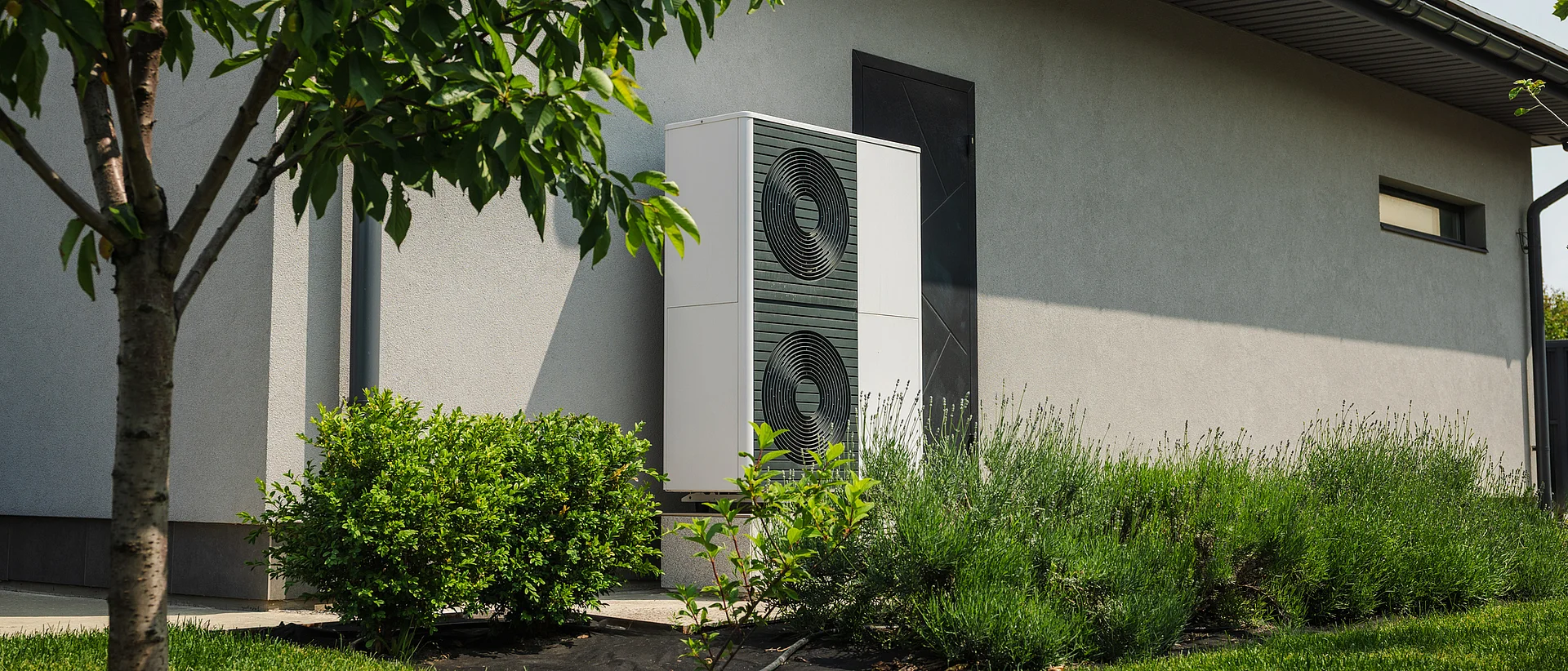
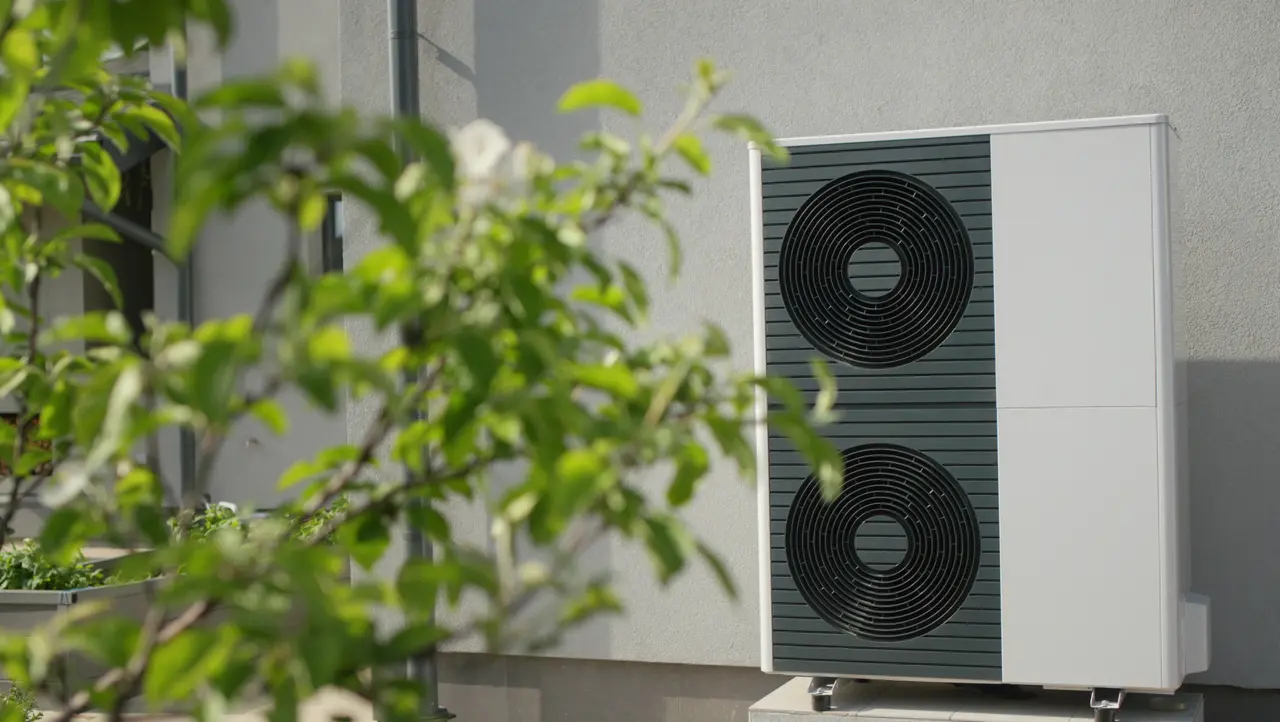
Air-source heat pumps are usually installed outside buildings, in gardens or on terraces. This allows them to draw in air, extract heat from it and then use this heat to warm both the house and the water. The space required is usually just a few square metres, plus any necessary gap between the heat pump and the house wall. This gap is needed to allow for good air circulation.
In short: negligible. The heat pump’s outdoor unit does produce some noise. This is around 60 decibels, which is comparable to a normal conversation. The highest noise levels occur during the winter months – that is, when the windows are closed and nobody is spending time in the garden, on the patio or on the balcony any longer.