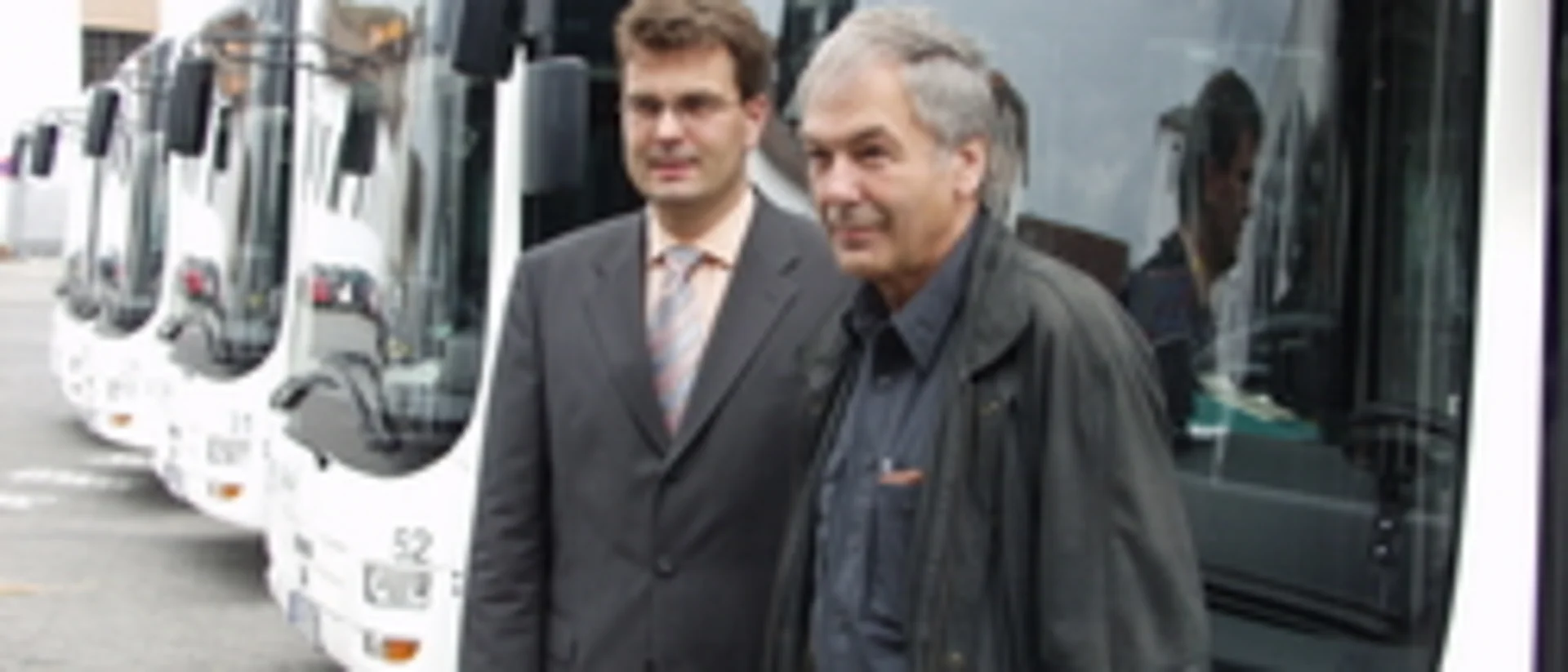
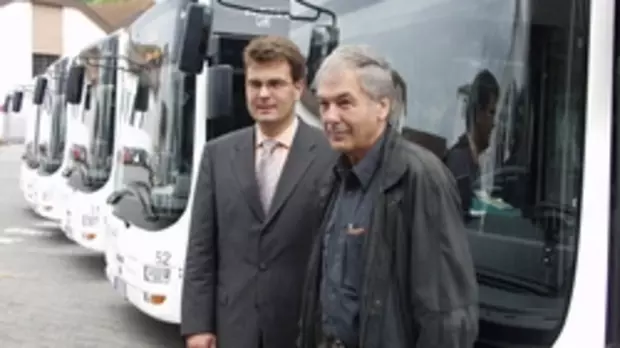
The bus fleet of MIT.BUS GmbH, the local transport subsidiary of Stadtwerke Gießen AG, is being expanded to include five environmentally friendly natural gas vehicles. With the two low-floor articulated buses and the three solo vehicles taking up service on the streets of Giessen, ten natural gas-powered buses are now on the road and, thanks to their low pollutant and particulate emissions, are helping to improve the air quality in Giessen. The new MAN Lion's City G buses with CNG drive (Compressed Natural Gas) with a total value of 1,450 thousand euros were presented by the Managing Director of MIT.BUS GmbH, Mathias Carl. "In order to take an important step towards the environment and contribute to the required improvement in air quality, we are focussing on natural gas buses," explained Mathias Carl.
Environmentally friendly drive
Emissions from motor vehicles are a burden on the environment. Natural gas vehicles are an alternative for reducing vehicle-related emissions. The natural gas buses already fall below the European Standard 5, which will come into force in 2009, and the new purchases fulfil the currently most demanding emissions standard EEV (Enhanced Environmentally Friendly Vehicle). The natural gas buses are not only clean for the environment, they are also quiet and economical. The five CNG models are to be followed by further natural gas-powered buses in the coming years.
Technology
Both the 18-metre articulated buses and the 12-metre solo vehicles are powered by a 310 hp water-cooled rear underfloor four-stroke petrol engine with central gas injection. The vehicles are equipped with a regulated 3-way catalytic converter. The buses have a tank capacity of 1,330 litres thanks to a roof tank system with seven aluminium composite tanks of 190 litres each.
Easy boarding
All vehicles in the MIT.BUS fleet are equipped with low-floor technology. The lower vehicle floor makes boarding and alighting much easier - this is often a problem with conventional buses, especially for parents with pushchairs, wheelchair users or people with walking difficulties. Double-leaf interior swing doors and the side "kneeling" with a lowered floor also make it easier to get on and off. Another new feature is the help button, which is labelled with a wheelchair and pushchair symbol. By pressing this button, passengers receive assistance from the bus driver when boarding and alighting.
To make it easier for passengers to read the route and destination, the LED display at the front of the bus is larger than before. For safety reasons, the second and third doors on articulated buses (the third door on solo vehicles) are equipped with automatic doors. These doors close automatically and cannot be operated by the bus driver. Bus drivers can also look forward to a more comfortable workplace. The new bus fleet has air conditioning and ensures a pleasant room temperature in the passenger compartment. The driver's workplace fulfils the standards of the Association of German Transport Companies (VDV).
Urban mobility of tomorrow
The only difference between the natural gas buses and the diesel-powered vehicles is the aerodynamic bonnet on the roof. This is where the storage system is located. The natural gas is stored at an operating pressure of 200 bar. The CNG buses refuel on the premises of Stadtwerke Gießen. The MAN low-floor buses not only stand for pioneering passenger transport, but also for unmistakable design. This also applies to the advanced technology and maximum comfort for passengers and drivers.