


Change at the top
There has been a change in the management of MIT.GIESSEN.
At MIT.GIESSEN GmbH, the City of Gießen and Stadtwerke Gießen (SWG) have pooled their expertise to drive forward the expansion of renewable energy – particularly photovoltaic systems – in a consistent and coordinated manner. There has recently been a change in leadership at the company: Denis Weinecker is taking over from Wladislav Krenz, who is leaving SWG – and consequently the subsidiary MIT.GIESSEN – at his own request. Together with Jutta Müller, Head of the Building Control Department at the City of Giessen, Denis Weinecker now forms the management team at MIT.GIESSEN.
New management duo – same focus
However, nothing is changing in MIT.GIESSEN’s successful approach: the City of Giessen and SWG are contributing their respective expertise to the joint subsidiary, thereby ensuring that more and more municipal properties are fitted with PV systems.
This well-established division of labour is proving to be very effective: “Since MIT.GIESSEN was founded, 28 PV systems have already been installed on schools, nurseries, sports halls, community centres and other municipal properties,” says Matthias Funk, CEO of SWG. The total output of these solar power stations is around 1.5 megawatts peak. In an average year, they supply a good 1,250 megawatt-hours of electricity, which is, of course, mainly consumed within the municipal facilities. “The systems therefore benefit both the climate and the city’s budget,” adds SWG board member Andreas Hergaß. Those in charge at the city council are also very satisfied with what has been achieved so far: “The work carried out by MIT.GIESSEN fully meets our expectations,” says Astrid Eibelshäuser, the long-standing councillor responsible for this portfolio, adding: “I would like to take this opportunity to express my sincere thanks to Wladislaw Krenz for his work. He has made a significant contribution to the development and success of MIT.GIESSEN.”
Consistent expansion
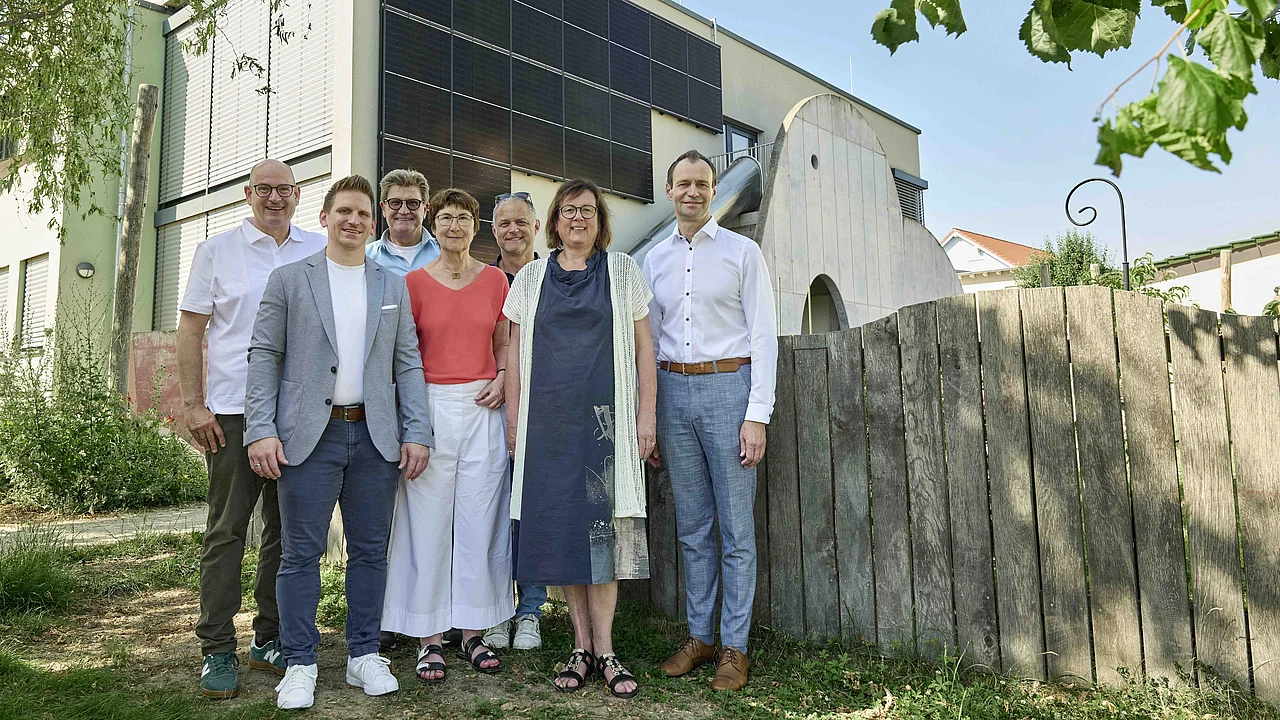
Further PV systems are set to be added before the end of this year – including on the sports halls of the Gießen West Primary School and the Sandfeld School, as well as on the façade of the Youth Welfare Office. In addition to roof areas, the façades of municipal buildings also offer space for solar installations and are set to be expanded within the MIT.GIESSEN portfolio – as demonstrated by the example of the Schlangenzahl nursery (photo). However, the challenges for future projects are growing. “Initially, we naturally focused on properties where, thanks to the structural conditions, PV systems could be installed relatively quickly and easily,” explains Jutta Müller. In future, however, more preparatory work will be required – such as roof refurbishment, necessary structural reinforcement or adjustments to the building’s low-voltage main distribution system. “This naturally increases the complexity and the coordination effort involved in the projects, but I am confident that we will continue to make good progress,” predicts Denis Weinecker.
There are two reasons why he is so optimistic about the future: firstly, like Wladislav Krenz, he can rely on a team at SWG that is both competent and committed. Secondly, he has had time to familiarise himself with his new role. Since May, he has been in regular contact with his predecessor at SWG and his new colleague from the Building Authority. “I’m looking forward to my new role and will do my utmost to drive forward the expansion of photovoltaic energy together with Jutta Müller and the teams from the city and at SWG,” says Denis Weinecker, summing it up.